Showing posts with label cancer life. Show all posts

Annual Summer Blogging Challenge


Fellow blogger and breast cancer advocate, Nancy Stordahl of Nancy's Point, has issued another series of questions in her annual Summer Blogging Challenge. Here are my answers. Thanks Nancy!
1. How long have you been blogging (or reading blogs)?
I started blogging last summer, so about a year. Unless you count my old LiveJournal, but let's pretend that never happened, mmmkay?
2. How has your blog changed?
I think my writing has taken on a more personal approach. When I started blogging I was clueless about which direction I wanted to take—was this going to be a blog for breast cancer patients or a blog for caregivers or a blog for anyone who's having a rough go at life (i.e., every human being ever)? Still figuring that out, but mostly I just try to be myself. And that seems to work for me.
3. What is your biggest blogging challenge/frustration?
People assume writing is therapeutic for me, but it's actually really hard. Like writing is the hardest thing ever. The words don't just flow effortlessly. Wish they did, but they don't. I don't always enjoy the process of writing as much as I enjoy having a finished piece in front of me. That (usually) makes it worth the effort.
Also, have you ever tried writing while a feral 4-year-old is doing acrobatics on the bed next to you?
And my technical skills are pretty abysmal.
4. What is your favorite post that you’ve written (or read)?
Probably this one ("We Need To Be OK With Not Being OK"). I wrote it after my second mastectomy, but it's still relevant as I'm grieving the death of my husband.
5. What are your goals for your blog? (Why do you read blogs?)
To become a better writer. To connect with people.
6. How many blogs do you read on a regular basis?
Honestly? None. I read bits here and there. But nothing regularly.
7. How do you determine what to share and what not to share; in other words, do you have blog boundaries? (or comment boundaries)
I do have to be careful about respecting my family's privacy. So I don't refer to anyone outside of my immediate family by name. In the past, whenever I wrote something especially personal I would get Paul's approval before posting it.
8. When things get hard, what keeps you blogging (or reading blogs)?
Encouragement from my readers. (Thank you!)
9. What is your biggest Cancer Land pet peeve today, right now, this minute?
This is going to upset a lot of people, probably. But I used to get slightly annoyed when people would say they were "still praying for that miracle" when Paul was dying. I'm maybe a terrible person for admitting this, and I'm definitely an imperfect Catholic because we're supposed to believe in miracles and all that? Somehow it just seemed like a dismissal of how serious things were. I knew Paul was going to die. Saying there was still a chance for a different outcome just didn't seem right. 
10. What one piece of advice would you offer to a new blogger?
Just start. Focus on writing. Don't worry about getting things perfect. They'll never be perfect. Just write.
11. Share something most people do not know about you. A secret sort of thing.
I loved watching True Blood, and don't you dare judge me.
12. What do you enjoy doing in your spare time?
Reading. Prowling thrift stores. Concerts. Dancing to Disney tunes with my four-year-old. Cuddling with dogs all day long. (I'm a Rover dog-sitter, so send me your pups the next time you're out of town!)

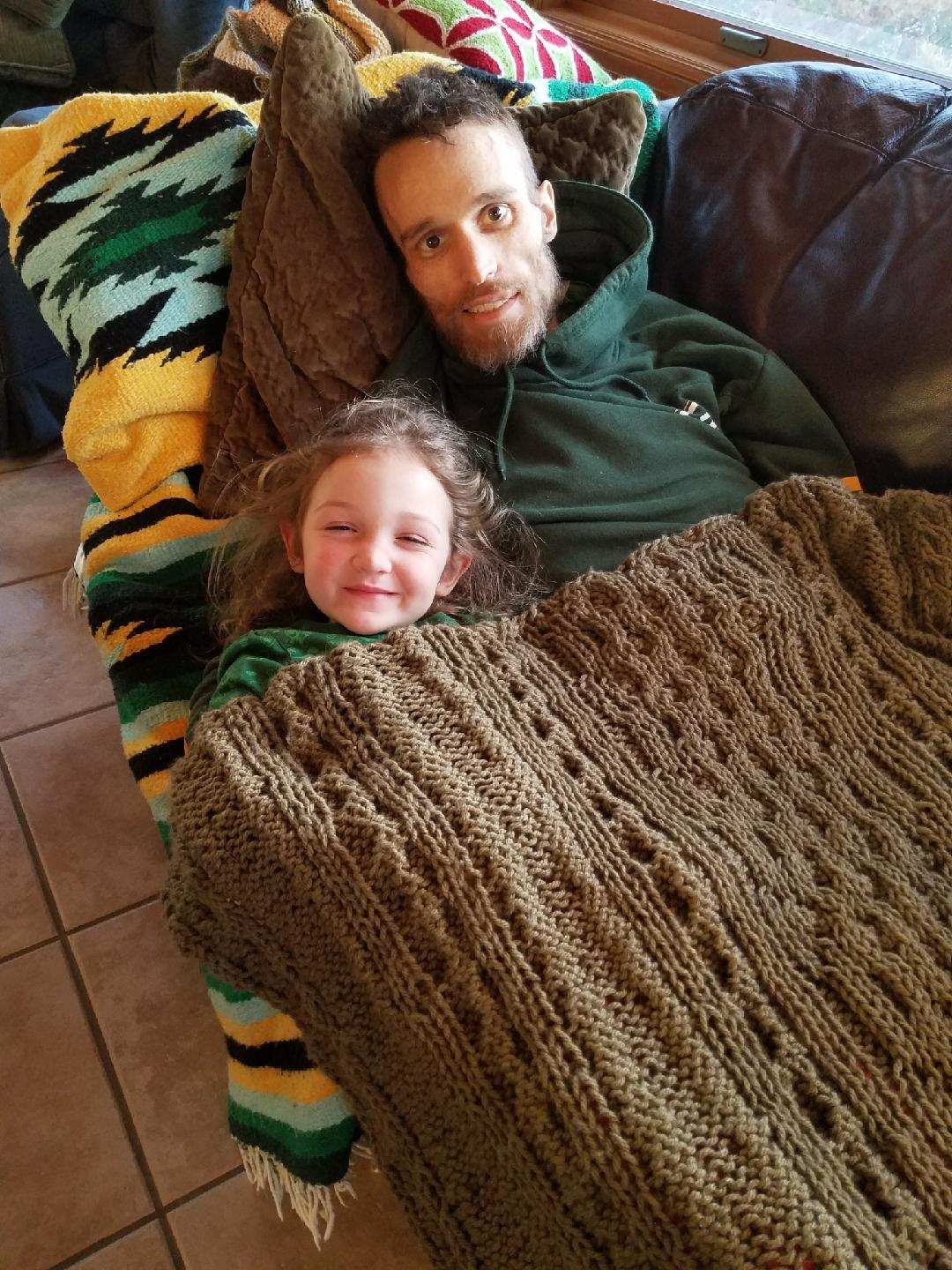
I'll Follow You Into The Dark

"Most things will be okay eventually, but not everything will be. Sometimes you'll put up a good fight and lose. Sometimes you'll hold on really hard and realize there is no choice but to let go.  
Acceptance is a small, quiet room." 
- Cheryl Strayed, Author of Wild

At this point, many of you have already heard the latest on Paul through Facebook. For everyone else, here's the scoop:

In my last post, I mentioned we were spending Easter with Paul's family in Wisconsin. But as our two-week visit approached its end, it became more and more evident that Paul wouldn't be making our return flight to Buffalo.

So the three of us are staying at Paul’s childhood home in Oshkosh, Wisconsin where he has entered Hospice care.


We have long considered making Oshkosh Paul's final resting place on this Earth. After observing his almost immediate "release" when the decision was final, I can say with a fair degree of certainty that we chose correctly.

At various points in the last month, every one of Paul’s seven siblings traveled home to spend some precious time with their brother and each other. In true Coleman form, we enjoyed boisterous meals rounded out with a minimum of three to four protein choices. Ingrid bonded with her cousins. My sisters-in-law made sure there was never a shortage of Paul’s favorite cookies (oatmeal raisin, for some reason).

There were things back in Buffalo, though, that needed attention. So I boarded my return flight solo, the empty seats on either side of me stinging reminders of the rotten week ahead. 

Originally, the plan was to hit up Orlando after our Wisconsin trip. But instead of scoring autographs from Elsa and Anna, I would be spending the week selecting tasteful memorial cards and scouting out prime burial plots. 

Which—have you ever done that? Shopped for burial plots, I mean. It’s weird, right?! I’d compare it to house-hunting with your real estate agent, only slightly less cheery. 

“Well, The Good Shepherd Hill has the most scenic treeline, which will be lovely in the summer months. But then you can purchase a package deal if you go with the plots around Ascension Bell. Depends what you’re looking for.”

So. WEIRD.

I fully expected to be wiped out after my cemetery tour. I had anticipated feeling a little drained after drumming up an obituary draft with our funeral director.

What I was less prepared to hit me so hard was the realization that the three of us would never be together in our little home again. Relics from Paul’s last few months in our house were like little knives to my heart every time I discovered them. Things like pill bottles tucked behind picture frames and vials of holy water resting on his bedside table.

It was gutting to see the recliner he’ll never sit in again, the bed he’ll never sleep in again, the flannels he’ll never wear again. Maybe that's dramatic, but as someone who weeps while putting baby clothes in storage, well, you can see how troubling this is for me.

But I survived. I accomplished what I needed to accomplish. Now I'm back in Wisconsin, and we are exactly where we’re supposed to be.

Paul’s days oscillate from “semi-tolerable” to “well, this is the pits.” Some days he can stomach a 20-minute jaunt around the neighborhood in his wheelchair. Some days he can’t get out of bed.

Tearful moments are often followed by welcome stretches of peace. I can only attribute these tranquil periods to the many prayers and well wishes being said on our behalf. That or my meds are triggering some choppy mood swings. Hard to say. Let's go with the former.

Thank you for being with our family in our sorrow. Your continued prayers and kindnesses mean more than I can express 
adequately here. 

Stumbling, But Still Kickin’

A few weeks ago, Paul wiped out on our front walkway.

We had just gotten home after spending 8+ hours in the hospital. I was holding Ingrid who was asleep in my arms, and I didn’t react fast enough to grab him before he fell. Which is weird because every time I replay this scene in my head, Paul is falling in excruciatingly slow motion.

He didn’t even slip on ice or uneven pavement or one of the three small steps that lead up to our house. He is just that weak. Weak to the point where he can hardly walk without assistance anymore.

He just fell backward, like a thin broomstick unable to hold itself upright without a prop. When I heard his head thwack the sidewalk, I winced and (gently) tossed a now-awake Ingrid onto the lawn to rush to his side.

Thankfully, there was a gentleman walking past our house at that exact moment. He secured his dog to a nearby lamppost and helped me hoist Paul to his feet.

Angels among us.

By now, the scrapes on his scalp have healed, but my nerves have yet to recover. I’ve taken to shadowing Paul around the house like a neurotic mother hen, clucking about handrails and muttering in an endless loop, “Be careful, be careful, please dear God be careful. Use your cane, don’t fall, here let me help you.”

“Liz, this is the bathroom.”

“And?”


“And...privacy?”

“Sheesh. Ok. Fine. BUT BE CAREFUL.”


via GIPHY


Last Thursday, we flew to Wisconsin to stay with Paul’s family for two weeks. It’s a good place for us to be right now—but it’s also a hard place to be because it’s terrible watching his family confront the reality that their sweet brother and son is slipping further away from them.

I’m pretty depleted emotionally these days, so you’ll forgive me for being somewhat unresponsive. Also, the laptop bit the dust so I’m typing this on an iPad, which is not ideal. 

Love to each and every one of you. 💜


A Cancerversary Post, Because.


“Without the dark there isn’t light. Without the pain there is no relief. And I remind myself that I’m lucky to be able to feel such great sorrow, and also such great happiness. I can grab on to each moment of joy and live in those moments because I have seen the bright contrast from dark to light and back again. I am privileged to be able to recognize that the sound of laughter is a blessing and a song, and to realize that the bright hours spent with my family and friends are extraordinary treasures to be saved, because those same moments are a medicine, a balm. Those moments are a promise that life is worth fighting for, and that promise is what pulls me through when depression distorts reality and tries to convince me otherwise.”  

- Jenny Lawson: author, blogger, mental illness advocate, lovable oddball

***

A year ago today I got probably the least fun phone call ever from my Ob/Gyn.

I knew what was coming, and I thought I was prepared to hear it. But like who’s ok with hearing they have cancer? 

As a rule, I don’t get too caught up in dates or anniversaries (“cancerversary,” some would call it). But when I think about how much my life has changed in the last 365 days, I’m still stunned. I still can’t believe I have (had? Is past tense allowed yet?) CANCER. It doesn’t compute. It can't be real. Until I look down at my chest and I’m like “Oh, right. THAT happened.”

Getting diagnosed with cancer was lousy.

The two weeks following my diagnosis were lousy X A BILLION.

Because everything in my world was a big fat question mark. “What stage am I?” “Did it spread?” “Am I going to go bankrupt?” “What if my skull has a weird shape?”

I remember asking my brand-new surgical oncologist if he could give me something to calm my nerves. “My brain won’t turn off. I sleep for 1 hour at night. GIVE ME DRUGS PLEASE I NEED THEM OR MY BRAIN AND HEART WILL EXPLODE FROM ALL OF THESE WORST-CASE SCENARIOS PLAYING OUT IN MY HEAD.”

The last year has looked something like this: 
  • 16 rounds of chemo. 
  • 1 ER visit, following a freak reaction to my meds (in hindsight, an almost funny story) 
  • 2 mastectomy operations (because one is never enough) 
  • 2 implants in. 1 implant out. 
  • Physical therapy 
  • 36 rounds of radiation 
  • Daily tamoxifen pills 
  • Monthly Zoladex injections. IN MY BELLY.
  • Scars, burns, weight loss, hair loss, fatigue, nausea, anxiety, consolatory hot fudge sundaes. (lots of those)
And that was just me. Add Paul’s stuff to the list and you’ve got a full-blown dissertation on your hands.

People tell me things like I’m a tough little cookie all the time. A lot of cancer patients have issues with compliments like this, and I totally get it. Because anyone in their situation would do the same thing, and are we really that brave for just doing what it takes to stay alive?

Buuuut also: 2017 was a total stinker. And maybe I don’t give myself enough credit for kind of keeping it together and sort of carrying on in less-than-favorable circumstances. Maybe I AM strong, and whatever
—I like when people tell me I am. SO SUE ME.

And anyway, if we’re handing out Tough Cookie Awards, Paul is so clearly top contender.

I know in my last post I said he wasn’t optimistic about future treatments. But now he’s considering giving chemo another shot. This time, at a lower and less frequent dose.

In the meantime, we’re enjoying the heck out of life and each other.

Like last week we took Ingrid to Disney on Ice. We voluntarily spent two hours dodging rogue glow sticks and listening to toddlers howl. Because that’s what families do. 

It was the best.

Love and Happiness,Liz

One of Us Will Die Inside These Arms


The other day, my radiation nurse asked how Paul was doing with treatment.

“Oh, he’s ok. I mean. Well. Actually. No.” I paused, unsure how to finish that sentence. I mean
—how do you casually tell people your husband is dying? (I probably did it very wrong.)

I stumbled through the key points: 

  • Paul stopped the chemo pill he was on. 
  • He probably won't pursue any more treatment. 
  • He’s focusing on enjoying what time he has left. 

See? It’s like dropping a bomb on people. 

It’s also been a major reason for the gaps between my evasive blog posts lately. It hurts too much to think those thoughts. It hurts worse to give them shape.

We had a great Christmas. Absolutely, we did. It was very special.

But.

Everything has taken on this weird blend of light and dark, happy and sad, gratitude and grief.

About a month ago, Paul went into the clinic for routine bloodwork. It was the usual state of affairs: low hemoglobin, requiring a cocktail of A- blood. Blood transfusions are an all-day event, so we passed the time by discussing fun topics such as: which photograph we should use in his obituary, and a Buy-One-Get-One headstone promo Paul considered “a deal we should jump on!”

When his oncologist stopped by, Paul broached the subject of stopping treatment. We wanted to get her honest input on the subject. Realistically, Paul asked, aren’t I coming to the end of the line in terms of treatment available to me?

Her tone was gentle, yet matter-of-fact: “Yes, we’re getting close to that point. Our options are winding down.”

In all of his years as a patient, a concrete timeline has never been assigned to Paul’s survival. Until very recently, the majority of our medical consultations have danced around the fact that his cancer would result in, uh, death. The language is usually more geared towards survival: treatments, clinical trials, getting better, the future.

Things are shifting, though. It’s impossible not to notice.


When I met him, Paul was a strapping, wood-chopping, winter-camping kind of dude with thick sideburns and an unhurried, mellow temperament. I found him extraordinarily charming in his Grateful Dead t-shirts and ‘93 stick-shift Volvo. He was easy to befriend. He was easy to fall in love with. 

Summer in Wisconsin, 2007

The sideburns and the Volvo have long since bit the dust, and we don’t do much camping these days. Certainly not in the hollowed-out cavern of a snow mound. (Paul maintains this is an enjoyable activity. We agree to disagree on the matter.)

He’s still charming, and he still has a laugh that makes my insides gooey. But he now checks in at 136 pounds and he sometimes needs help getting into a standing position.

Before the holidays, Paul’s palliative care doctor asked, ever so gently, if we had worked out his end-of-life wishes. She gave us pamphlets with photographs of silvery-haired couples and instructions on how to initiate this conversation. Not a cheery read. But I was grateful for her candid approach. 


Last month, we got in touch with an end-of-life wish-granting organization. I gave the forms to Paul’s oncologist, who happily completed them. Afterward, I scanned what she had written in the space following “Patient’s Life Expectancy”—6-12 months.

6-12 months.

Could be more, could be less. But I don’t think those numbers are far off the mark.

I’ve been hesitant with posting, too, because I don’t want to be this woe-is-me harbinger of gloom. So I’m sad, so what. Everyone is sad.

And people have been so good to us. So generous, so kind and helpful. Who needs to hear how I can’t drive anywhere without some stupid Ed Sheeran song on the stupid radio making me bawl my stupid eyes out? (It’s terrific trying to compose myself at red lights. Nothing to see here, folks. Just a slightly hysterical woman who maybe shouldn’t be driving.)

A few weeks ago, Ingrid approached me with a serious look on her face.

“Mom? Is my Dad ok?”

Me: “What makes you ask that?”

Ingrid: “My Dad is so...so…so…(she stammered in search of the appropriate adjective)...so SAD.”

He is sad, naturally. But he’s still Paul and he still jokes in his singularly “Paul” way. His 33rd birthday fell on Thanksgiving this year. While planning our menu and arguing the superior features of our preferred holiday desserts, Paul played the dying card
—he played it hard.

“But Liz, you do know this is going to be my LAST Thanksgiving, right? My LAST birthday.”

Me: “...”


Paul: “Cherry pie it is then.”

I’m sorry for this party pooper of a post. But then, I write about cancer. Not much happy stuff to report on the topic, I’m afraid.

Please know we are so grateful for all of the encouragement and meals and Wegmans gift cards and prayers we’re still receiving. I wish I could give every single one of you a giant bear hug to say “Thank you, we love you, you’re making this so much easier for us.” Except it would be less of a giant bear hug and more of a delicate fist bump because I’m not a hugger and, well, you understand.


xoxo

15 Tweets That Will Make You Laugh If Your Life Is A Trainwreck

Are you on Twitter? I've only been hanging out there since the summer. For months, I felt like a stranger in a strange land. I still feel like the gangly tween at the party, but I don't care because Twitter is where all the hilarious, raucous kids hang out and it makes me feel like maybe I could sit at their lunch table and, I don't know, trade friendship bracelets or something.

Basically, I swing by Twitter when I need a laugh. Take these with a huge grain of salt.


15 Tweets That Will Make You Laugh If Your Life Is A Trainwreck:

1.

2.

3.

4.

5.

6.

7.

8.

9.

10.

11.

12.

13.

14. 

15.

I'd also like to take a moment to point out how hilarious and fantastic my friend Maureen is (note # 5). I know her in real life, and it's the greatest.


What's So Great About Being Busy?

Turns out radiation leaves me wrecked, and I am running on loooow batteries, friends. Anything not required for basic survival is...just not happening. Including writing. And probably mailing out Christmas cards. Which, normally, are two activities that give me quite a lot of pleasure. Now, they just look like work. I am trying to give myself the grace to NOT do things. And to not feel bad about not doing things. (Which ERMAHGERD, is so much harder than it should be!)

Can We Stop Glorifying Busy, Already?!

Ever feel like being busy is the modern equivalent of “living life to the fullest?” We’re obsessed with being busy. It’s in vogue.

It’s also a drag.

Look at the way we talk—autopilot kicks on when people ask about our weekend—“It was good, just busy.” We don’t even notice ourselves saying it because it’s become such an ingrained dimension of how we interpret our worth. If we say we’re busy, we must be productive. If we’re productive, we must be worthwhile.  

I say it. All the time! Even when I KNOW I haven’t done a bloody thing for five consecutive days. As if declaring my busyness proves, cancer be damned, I am STILL a contributing member of society.

After my morning treatment, one of the techs will often ask about my plans for the rest of the day. I’m weirdly relieved when I have a number of errands I can rattle off. Or a family outing.

Today I had nothing. Literally, nothing. And I was bizarrely embarrassed to admit that.

“So—any plans for today?”

“Nope. Um. Nope. Nothing. Just going home. To. Rest?”

Inside, of course, I was thrilled to finally have a day with nothing I had to do. Thrilled and ashamed.

This time of year, especially, we run around like chickens with our heads cut off, and we’re happy to do it because it makes us feel important and needed and valuable. We wear our busyness like some twisted badge of honor. But—

How exactly does running ourselves ragged contribute to our well-being?

It doesn’t. It makes us stressed and miserable. I don’t want to be stressed and miserable.

And I’m not talking about our jobs or taking care of our kids or any of the things we HAVE to do. You should probably keep doing those things. But that doesn't mean you can't give yourself the space to just do...nothing. (It's really ok!)

Good Things Happen When We Stop Trying To Do It All


Photo by Nine Köpfer on Unsplash

When we’re not distracted by a relentless flurry of activity, something really cool happens: we connect, we reflect, and we grow. Three things I'd wager that are more important (and fun and pleasurable) than an overbooked planner.

When we slow down and eliminate even just a little of our self-imposed busyness—that’s when most of our so-called “a-ha” moments occur. Stepping off the hamster wheel gives us clarity. It lets us enjoy the things we insist are important—leisurely moments with the people we love, watching our children delight in nature, a rich inner life.

I don’t like to credit cancer with enriching my life (cancer didn’t make me grow—I did) but treatments did force me to reevaluate how I spend my time and energy. There were moments in the last year when I felt like I was juggling a dozen swords and flaming torches while balancing on a unicycle. I was exhausted and frazzled.

But I think it's safe to blame a lot of my exhaustion and general frazzledness on activities I didn’t NEED to do. (that and chemo running through my veins. But mindless busyness, mostly.)

Here's the thing. There is value and opportunity for growth in the moments when our busyness comes to a screeching halt. I know that sounds like the advice you’d get from a bearded, blissed-out mountain guru, but I stand by it.

A few years ago, Tim Kreider wrote a hugely popular and insightful article called “The ‘Busy’ Trap” for the New York Times. In it he says:

“Idleness is not just a vacation, an indulgence or a vice; it is as indispensable to the brain as vitamin D is to the body, and deprived of it we suffer a mental affliction as disfiguring as rickets. The space and quiet that idleness provides is a necessary condition for standing back from life and seeing it whole, for making unexpected connections and waiting for the wild summer lightning strikes of inspiration—it is, paradoxically, necessary to getting any work done.”

You are not a loser for taking it easy today. Relaxing doesn't make you a failure. You’re not less ambitious or dull or pathetic if you want to check out for the afternoon. And. Just. Do. Nothing.

Do you ever feel pressure to fill your days with busyness?

Do you feel guilty or lazy when you aren’t busy? Like you should be finding something productive to do with your time?

Or do you consciously try to set aside time for just “being” instead of “doing?”


It's Brave (and more than ok) To Accept a New Normal


My original goal here was to write at least one blog post per week. But I was busy watching season 2 of Stranger Things last week. And by week, I mean 3 days. Because how could you possibly take longer than 72 hours to watch it? If you have no clue what I’m talking about—I’m sorry, but if you haven’t watched Stranger Things, are you even living?

So. Why are you still here? Go. Watch. And then come back so we can fangirl together until our heads and hearts explode over how awesomely awesome that show is. 

The past is in the past. Let it go.

With Halloween in our rearview, we are clipping along at a furious pace towards the holiday season—and I find myself glancing back at the contrasting landscape we found ourselves in a year ago. Because I am a well-adjusted individual who participates in healthy activities that foster self-love and contentment. 

Things weren’t perfect last year. But they were blissfully far away from the shit show that is 2017. 

Sometimes I like to hang out in that cobwebby corner of my mind, waiting for those memories to show up. Even if they come with switchblades in their pockets
—my thoughts can be devilishly masochistic. 

A year ago, I was trying to get pregnant.
This year, we face the almost certain chance our daughter will be an only child.

A year ago, Paul was working a physically demanding full-time job.
This year, he’s working his haute couture cane down the driveway.

A year ago, my biggest health concern was shrinking a few haphazard zits along my jawline.
This year, shrinking a massive tumor in my breast took precedence. 

Last summer, Paul had the stamina to rig up our toddler’s trailer and tug her behind his bike for hours.
This summer, our bikes didn’t leave the garage. 

Last year, our weekly schedule revolved around Paul’s varying work hours.
This year, our weekly schedule involves a juggling act of 4 or more doctors' appointments.

How many times during crisis mode do we say “I can’t wait for things to go back to normal?”

I used to say that all the time.

I can’t wait for Paul to finish chemo so he can stop being tired all the time. 

I can’t wait until I finish treatment so I can just get on with my life. 

I can’t wait until Ingrid is potty-trained so I can stop buying expensive diapers. 

We just want things to be normal. When life gets turned inside-out, we protest and pine for the way things used to be. But what if there is no more normal? What if things are never going to go back to the way they used to be?

When my husband was first diagnosed with terminal cancer, I was really bad at this. I clung to our old version of normal, desperate to retrieve it. I convinced myself that things could eventually be reversed. Paul would be cured and go back to work and we’d have a bunch of kids and spend our summers rambling the West in a vintage caravan. 


That was how we'd find happiness. By getting back to our own definition of normal. By getting back to our pre-cancer lives. 

Here’s a fun, little reality check for you: our old normal has been obliterated. As in, it no longer exists. We will NEVER EVER EVER go back to the way things were.

That can be a tough pill to swallow.

Changing our perspective on acceptance

I recently read Paul Kalanithi’s memoir When Breath Becomes Air. Paul was a brilliant neurosurgeon who was diagnosed with terminal, metastatic lung cancer at the age of 36. The book, which he wrote during his final year of life, explores his quest to understand what makes life meaningful. 

Following his diagnosis and depleting treatments, Paul continues to pursue his rigorous medical training in an attempt to maintain the normalcy of his life. But things couldn’t move in the same direction his healthy self had planned:

“As furiously as I had tried to resist it, I realized that cancer had changed the calculus. For the last several months, I had striven with every ounce to restore my life to its pre-cancer trajectory, trying to deny cancer any purchase on my life…[but] even when the cancer was in retreat, it cast long shadows.” - Paul Kalanithi 
It’s not about “giving up” or “letting cancer win.” It just is. It’s facts. It’s reality. Just as Kalanithi had to learn how to live with a new set of circumstances post-diagnosis, my family continues to adjust to our new normal. One we’re not particularly fond of, but one that we’re stuck with.

This happens to everyone: we’re thrust into new normals when we have children (5 AM becomes the new 9 AM.) It happens when we go through a divorce, when we move across the country, when we switch to night shift, when our favorite Korean diner goes bankrupt (oh, cruel world.)

Personally, our family’s new normal involves more ER visits and “why-do-I-even-pay-for-insurance” moments than I’d like. It involves more conversations on end-of-life care than I had anticipated as a newlywed. It comes with a lot more poking and prodding than my husband would prefer.

With time and practice and a healthy dollop of humility, I’ve come around to accepting my new normal. I still get wistful and cranky about it, sure. But my family doesn’t benefit from my bucking against circumstances that are out of my control.

For the record, accepting the way things are is not the same as “giving up” or becoming the proverbial wet blanket. Taking my reality for what it is and not demanding it be something it can't be
—this isn’t an act of weakness or apathy or laziness.

It’s kind of brave to hold steady and look reality in the face.

It’s sort of a big deal to learn how to keep living with whatever version of normal life hands you.


Has life ever handed you a "New Normal"? 

Were you about to accept your new circumstances gracefully, or was it a challenge to move forward? 

Can you offer any advice to those who might be entering a drastically different season of life?