Showing posts with label mesothelioma. Show all posts

I'll Follow You Into The Dark

"Most things will be okay eventually, but not everything will be. Sometimes you'll put up a good fight and lose. Sometimes you'll hold on really hard and realize there is no choice but to let go.  
Acceptance is a small, quiet room." 
- Cheryl Strayed, Author of Wild

At this point, many of you have already heard the latest on Paul through Facebook. For everyone else, here's the scoop:

In my last post, I mentioned we were spending Easter with Paul's family in Wisconsin. But as our two-week visit approached its end, it became more and more evident that Paul wouldn't be making our return flight to Buffalo.

So the three of us are staying at Paul’s childhood home in Oshkosh, Wisconsin where he has entered Hospice care.
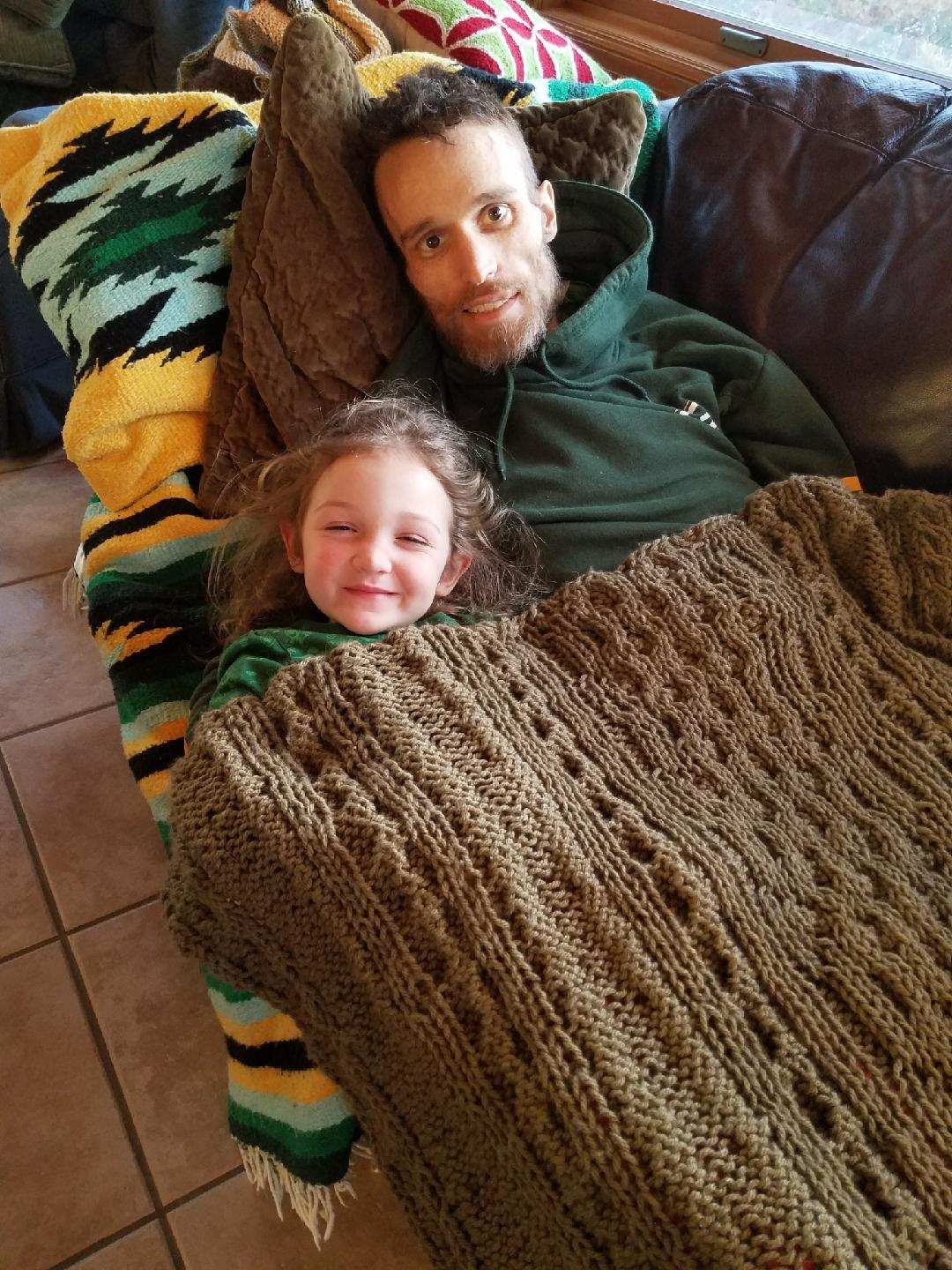


We have long considered making Oshkosh Paul's final resting place on this Earth. After observing his almost immediate "release" when the decision was final, I can say with a fair degree of certainty that we chose correctly.

At various points in the last month, every one of Paul’s seven siblings traveled home to spend some precious time with their brother and each other. In true Coleman form, we enjoyed boisterous meals rounded out with a minimum of three to four protein choices. Ingrid bonded with her cousins. My sisters-in-law made sure there was never a shortage of Paul’s favorite cookies (oatmeal raisin, for some reason).

There were things back in Buffalo, though, that needed attention. So I boarded my return flight solo, the empty seats on either side of me stinging reminders of the rotten week ahead. 

Originally, the plan was to hit up Orlando after our Wisconsin trip. But instead of scoring autographs from Elsa and Anna, I would be spending the week selecting tasteful memorial cards and scouting out prime burial plots. 

Which—have you ever done that? Shopped for burial plots, I mean. It’s weird, right?! I’d compare it to house-hunting with your real estate agent, only slightly less cheery. 

“Well, The Good Shepherd Hill has the most scenic treeline, which will be lovely in the summer months. But then you can purchase a package deal if you go with the plots around Ascension Bell. Depends what you’re looking for.”

So. WEIRD.

I fully expected to be wiped out after my cemetery tour. I had anticipated feeling a little drained after drumming up an obituary draft with our funeral director.

What I was less prepared to hit me so hard was the realization that the three of us would never be together in our little home again. Relics from Paul’s last few months in our house were like little knives to my heart every time I discovered them. Things like pill bottles tucked behind picture frames and vials of holy water resting on his bedside table.

It was gutting to see the recliner he’ll never sit in again, the bed he’ll never sleep in again, the flannels he’ll never wear again. Maybe that's dramatic, but as someone who weeps while putting baby clothes in storage, well, you can see how troubling this is for me.

But I survived. I accomplished what I needed to accomplish. Now I'm back in Wisconsin, and we are exactly where we’re supposed to be.

Paul’s days oscillate from “semi-tolerable” to “well, this is the pits.” Some days he can stomach a 20-minute jaunt around the neighborhood in his wheelchair. Some days he can’t get out of bed.

Tearful moments are often followed by welcome stretches of peace. I can only attribute these tranquil periods to the many prayers and well wishes being said on our behalf. That or my meds are triggering some choppy mood swings. Hard to say. Let's go with the former.

Thank you for being with our family in our sorrow. Your continued prayers and kindnesses mean more than I can express 
adequately here. 

Stumbling, But Still Kickin’

A few weeks ago, Paul wiped out on our front walkway.

We had just gotten home after spending 8+ hours in the hospital. I was holding Ingrid who was asleep in my arms, and I didn’t react fast enough to grab him before he fell. Which is weird because every time I replay this scene in my head, Paul is falling in excruciatingly slow motion.

He didn’t even slip on ice or uneven pavement or one of the three small steps that lead up to our house. He is just that weak. Weak to the point where he can hardly walk without assistance anymore.

He just fell backward, like a thin broomstick unable to hold itself upright without a prop. When I heard his head thwack the sidewalk, I winced and (gently) tossed a now-awake Ingrid onto the lawn to rush to his side.

Thankfully, there was a gentleman walking past our house at that exact moment. He secured his dog to a nearby lamppost and helped me hoist Paul to his feet.

Angels among us.

By now, the scrapes on his scalp have healed, but my nerves have yet to recover. I’ve taken to shadowing Paul around the house like a neurotic mother hen, clucking about handrails and muttering in an endless loop, “Be careful, be careful, please dear God be careful. Use your cane, don’t fall, here let me help you.”

“Liz, this is the bathroom.”

“And?”


“And...privacy?”

“Sheesh. Ok. Fine. BUT BE CAREFUL.”


via GIPHY


Last Thursday, we flew to Wisconsin to stay with Paul’s family for two weeks. It’s a good place for us to be right now—but it’s also a hard place to be because it’s terrible watching his family confront the reality that their sweet brother and son is slipping further away from them.

I’m pretty depleted emotionally these days, so you’ll forgive me for being somewhat unresponsive. Also, the laptop bit the dust so I’m typing this on an iPad, which is not ideal. 

Love to each and every one of you. 💜


One of Us Will Die Inside These Arms


The other day, my radiation nurse asked how Paul was doing with treatment.

“Oh, he’s ok. I mean. Well. Actually. No.” I paused, unsure how to finish that sentence. I mean
—how do you casually tell people your husband is dying? (I probably did it very wrong.)

I stumbled through the key points: 

  • Paul stopped the chemo pill he was on. 
  • He probably won't pursue any more treatment. 
  • He’s focusing on enjoying what time he has left. 

See? It’s like dropping a bomb on people. 

It’s also been a major reason for the gaps between my evasive blog posts lately. It hurts too much to think those thoughts. It hurts worse to give them shape.

We had a great Christmas. Absolutely, we did. It was very special.

But.

Everything has taken on this weird blend of light and dark, happy and sad, gratitude and grief.

About a month ago, Paul went into the clinic for routine bloodwork. It was the usual state of affairs: low hemoglobin, requiring a cocktail of A- blood. Blood transfusions are an all-day event, so we passed the time by discussing fun topics such as: which photograph we should use in his obituary, and a Buy-One-Get-One headstone promo Paul considered “a deal we should jump on!”

When his oncologist stopped by, Paul broached the subject of stopping treatment. We wanted to get her honest input on the subject. Realistically, Paul asked, aren’t I coming to the end of the line in terms of treatment available to me?

Her tone was gentle, yet matter-of-fact: “Yes, we’re getting close to that point. Our options are winding down.”

In all of his years as a patient, a concrete timeline has never been assigned to Paul’s survival. Until very recently, the majority of our medical consultations have danced around the fact that his cancer would result in, uh, death. The language is usually more geared towards survival: treatments, clinical trials, getting better, the future.

Things are shifting, though. It’s impossible not to notice.


When I met him, Paul was a strapping, wood-chopping, winter-camping kind of dude with thick sideburns and an unhurried, mellow temperament. I found him extraordinarily charming in his Grateful Dead t-shirts and ‘93 stick-shift Volvo. He was easy to befriend. He was easy to fall in love with. 

Summer in Wisconsin, 2007

The sideburns and the Volvo have long since bit the dust, and we don’t do much camping these days. Certainly not in the hollowed-out cavern of a snow mound. (Paul maintains this is an enjoyable activity. We agree to disagree on the matter.)

He’s still charming, and he still has a laugh that makes my insides gooey. But he now checks in at 136 pounds and he sometimes needs help getting into a standing position.

Before the holidays, Paul’s palliative care doctor asked, ever so gently, if we had worked out his end-of-life wishes. She gave us pamphlets with photographs of silvery-haired couples and instructions on how to initiate this conversation. Not a cheery read. But I was grateful for her candid approach. 


Last month, we got in touch with an end-of-life wish-granting organization. I gave the forms to Paul’s oncologist, who happily completed them. Afterward, I scanned what she had written in the space following “Patient’s Life Expectancy”—6-12 months.

6-12 months.

Could be more, could be less. But I don’t think those numbers are far off the mark.

I’ve been hesitant with posting, too, because I don’t want to be this woe-is-me harbinger of gloom. So I’m sad, so what. Everyone is sad.

And people have been so good to us. So generous, so kind and helpful. Who needs to hear how I can’t drive anywhere without some stupid Ed Sheeran song on the stupid radio making me bawl my stupid eyes out? (It’s terrific trying to compose myself at red lights. Nothing to see here, folks. Just a slightly hysterical woman who maybe shouldn’t be driving.)

A few weeks ago, Ingrid approached me with a serious look on her face.

“Mom? Is my Dad ok?”

Me: “What makes you ask that?”

Ingrid: “My Dad is so...so…so…(she stammered in search of the appropriate adjective)...so SAD.”

He is sad, naturally. But he’s still Paul and he still jokes in his singularly “Paul” way. His 33rd birthday fell on Thanksgiving this year. While planning our menu and arguing the superior features of our preferred holiday desserts, Paul played the dying card
—he played it hard.

“But Liz, you do know this is going to be my LAST Thanksgiving, right? My LAST birthday.”

Me: “...”


Paul: “Cherry pie it is then.”

I’m sorry for this party pooper of a post. But then, I write about cancer. Not much happy stuff to report on the topic, I’m afraid.

Please know we are so grateful for all of the encouragement and meals and Wegmans gift cards and prayers we’re still receiving. I wish I could give every single one of you a giant bear hug to say “Thank you, we love you, you’re making this so much easier for us.” Except it would be less of a giant bear hug and more of a delicate fist bump because I’m not a hugger and, well, you understand.


xoxo

Appearance ≠ Health (so be nice to humans!)

sidenote: I originally wrote this piece a couple of months back, while recovering from my first mastectomy. Then I got crummy news about my cancer, and this post seemed totally irrelevant so I never published it. I've been saving it for the right time. Which is now because the writer-y part of my brain is kaput, and I am overwhelmingly TIRED. 

"Be kind. For everyone you meet is fighting a battle you know nothing about."

Yes, I did just open this post with an authorless quote that sounds like it was swiped from the Pinterest board of a delusionally optimistic sorority girl.

And yet. Read it again. Because it's actually kind of important.

When people see me in a bandana trying to wrangle a Hershey bar out of my toddler's death grip, they already know my battle. It's visibly obvious I've been through chemo. Either that or my fashion sense is tragically rubbish. But most people (I hope) assume the former.

This does have its benefits. Strangers are ever so nice to you when they can see you have cancer.

Case in point: the girl who shooed away my dollar bills while serving me gelato.

Also, the couple who let me and my sister temporarily take their front-place spot at The Shins concert. 

Also, the lady who immediately ran to my aid after I dropped a carton of eggs in the checkout line at Wegmans. 

Also, that other lady who ran to my aid after I dropped a glass terrarium at Michael's a week later (Yes, this is my life. These things happen to me.)

I'd like to say people choose kindness regardless of the recipient's headwear. The truth is, though, I noticed a significant increase in kind actions on my behalf after I started chemo.

Which I so appreciate. It reminds me of how accommodating people were when I was very obviously pregnant. Perfect strangers treat you like royalty when you're visibly expecting
—pulling out chairs and helping you bag groceries at Aldi. (how's that for nice?!)

This is all good and lovely, people helping chemo patients and chubby pregnant ladies. But what about the women who are in their first trimester of pregnancy? You'd never know it by looking at them, but they're the ones with their heads in the toilet while the rest of us 3rd trimesters stuff our faces with pizza pockets. It seems so unfair.

Which brings me to Paul. To the unsuspecting stranger, he appears perfectly "normal" (if you ignore the beige support stockings and typically unmatching getup.) He doesn't look sick. He doesn't look like he has terminal cancer.
 Outwardly, he appears fine, so people treat him as such.

"As such" means: impatiently. Rude, even. This makes my head & heart hurt. I may sound like a defensive mother whose child is being bullied on the playground, but when people get ruffled because my husband is not walking quickly enough for them in the airport terminal, well, I just want to punch their throats.


He may look like your average spry 32-year-old, but he can barely make it up a flight of stairs without getting winded.

He may look totally healthy, but sometimes he coughs so hard he throws up.

Cancer isn't the only "invisible disability", of course. There's also MS, Epilepsy, Cystic Fibrosis, depression, people with chronic pain, and on and on and on.

The takeaway here is simple: Be kind, be kind, be kind. It's so easy, and it goes such a long way. 

Love, 
Liz

Some Good News, Huzzah!

This space could use a jolt of happy, wouldn’t you agree?

I had my first post-op appointment with my surgical oncologist yesterday. Remind me to never schedule things in the afternoon. Waiting around turns me into a strung-out lunatic. By the time we were ready to leave, my stress level had surpassed its breaking point
—Paul drove. I cried.

Perched on the examining room chair, I fidget with the ties of my pink cover-up. My doctor pokes his head in the door, smiling. Smiling is a good sign. I like smiling.

We talk about how I’m feeling. He takes a look at my incision. He decides it’s time to remove the sutures.

“I’ll be right back. I’m just going to run and grab a suture removal kit, ok?”

Ok. But um, like
—do I still have cancer?


As he’s pulling out my stitches: “So the pathology, it all came back negative. The margins are clear.”

!!!!!!!!!!!!!!!!!!!!!!!!!!!!!!

And you didn't open with that because...?!


But who cares! I am blissed out of my damn mind.


To clarify: when you have a mastectomy, a rim of normal tissue surrounding the tumor is also removed, which is called a "margin." My first mastectomy in July resulted in "dirty" or "positive" margins, which is why I required a second operation.

It turns out there is still one area where the margin is "close," meaning cancer cells were not far from the edge of the removed tissue. This isn't ideal, but my medical team is confident that adjuvant radiation therapy and 10 years of Tamoxifen will be more than enough to make sure this cancer knows it's not welcome and it needs to find another couch to crash on.

I practically skipped down the steps to the parking lot. I was giddy. Like a 50-pound weight had been lifted from my shoulders.

And then we got into the car and headed to our second appointment of the day: Roswell Park's Assessment and Treatment Center.

It's not an untypical day
—ping-ponging from a moment of dizzying rapture back to the unhappy reality of Paul’s worsening symptoms: feverish temps, stomach pain, vomiting.

It was the usual succession of tests
—bloodwork, a urine sample, x-rays. Most of our time is spent waiting.

I crawl into the small space Paul had made for me in his hospital bed, avoiding the tubing that was pumping sodium chloride into his depleted body. We watched Chopped on the Food Network, and I pressed my face against his bony shoulder. Everything
—the flit of nurses in-and-out, the boring cable TV, the rough hospital linens—it’s all so familiar. How many days have we spent like this?

Nothing particularly stood out with any of Paul's test results, so they sent us home with a short-term antibiotic (just in case) and instructions to call in the morning to schedule another blood transfusion.


Which is how we will be spending our day tomorrow.

Highs and lows, man. Highs and lows.

What is Mesothelioma, Anyway? 10 Quick Things You Should Know


September 26th is Mesothelioma Awareness Day, so I’d like to turn the mic over to my dear husband, Paul. “Enough with the Liz chronicles. We want Paul!” said everyone, everywhere. 

I hear ya, I do. Let’s talk about meso.


If you’re asking Google (like I did 5 years ago when Paul was diagnosed) you’ll mostly find lawyer ads and a lot of bleak statistics. Like these numbers are not going to make you feel good. 

There’s a lot of unhelpful information about mesothelioma floating around the Internet. So it was by divine intervention (or something like it) that I was able to find the Mesothelioma Applied Research Foundation while desperately searching for financial assistance a few years ago.

This organization is the real deal. They are: 
“the only nonprofit, charity organization dedicated to ending mesothelioma and the suffering caused by it, by funding research, providing education and support for patients and their families, and by advocating for federal funding of mesothelioma research.”
It's true! Personally, the Meso Foundation helped our family finance a trip to meet with a specialist in Chicago. They also host a yearly Symposium on Malignant Mesothelioma, which we attended in 2015. This event connected us with other specialists in the field as well as families struggling with the same issues we were (a first, for us.)

I’m no clairvoyant, and I don’t presume to understand the seemingly insignificant, everyday decisions that can redirect our ever-flowing lives. But I do believe discovering the Meso Foundation truly CHANGED OUR LIVES.

Because: where would we be if they had never introduced Paul to the team at the National Institute of Health? Would he still have elected to be treated by them? Would he have chosen a different course of treatment? Would we have been given these years that we’ve enjoyed together?

I don’t know.

What I do know is that, for the average person, mesothelioma is a disease shrouded in mystery. Everyone, it seems, has some connection to breast cancer. Maybe their sister had it, or their aunt was recently diagnosed, or they went through treatment themselves. Quite literally, and sadly, everyone I talk to has a breast cancer story.

But when someone asks what type of cancer Paul has, it's all raised eyebrows and variations of “oh, the cancer with all the lawyer commercials? How did he get that?”

Most people know two things about mesothelioma: (1) It’s associated with asbestos exposure, and (
2) it can make you filthy rich if you talk to the right lawyer (not the case.)

In the spirit of patient advocacy, I’d like to shed some light on the lousy cancer my husband has been wrestling with for the past 5 years.

10 Things You Should Know About Mesothelioma (because this stuff kills)

1.  Typically, meso is caused by asbestos exposure
—but not always. As Paul’s surgeon put it, “sometimes it’s just bad luck.” We’ve never been able to pinpoint a definitive place or time where Paul could have been exposed, though we have our suspicions. But suspicions do not a lawsuit make. (We've tried. With three different law firms.)

2.  Asbestos is still present in thousands of older construction and housing products like insulation, siding, and floors. If your home was built before 1970, there’s a chance asbestos is lurking in the materials. Which brings us to fact # 3...

3.  I know DIY is all the rage, and there are at least 16 variations of Fixer Upper on TV (I love these shows, their hosts are magical visionaries.) But 
don’t tear up your dated kitchen tiles before calling a certified abatement crew to identify any questionable materials in your home. Asbestos is safe as long as it’s contained, but once you disturb it, it’s game over. Let the professionals remove it or encapsulate it. The right way.

4.  Asbestos STILL isn’t banned in the US. This makes my blood boil. The EPA has made some strides since the '70s to regulate asbestos-containing products. Asbestos is banned, for instance, in corrugated and commercial paper. However, in the United States companies are not barred from importing and distributing many products that contain asbestos such as clothing, vinyl floor tile, and car gaskets. 

5.  Mesothelioma has a loooong latency period. Often, symptoms don’t show up until 20-50 years after the initial exposure to asbestos. By the time the cancer is detected, it’s usually very advanced. For all we know, Paul could’ve ingested a microscopic asbestos fiber as an infant, where it grew silently for years.

6.  Mesothelioma can be contracted through secondhand exposure. This occurs when a family member brings home asbestos particles on their clothing or hair. Patients can be exposed as innocent children and develop this deadly cancer decades later. Not okay in my book.

7.  The lungs aren't the only organs that can be infiltrated by meso. It can also invade the lining of the heart (pericardial meso) and the lining of the abdomen (peritoneal meso), which is what Paul has been fighting for years.

8.  Mesothelioma is an incredibly rare cancer
—only 3,000 new diagnoses are made every year. (A disease can only be classified as "rare" if there are less than 200,000 cases of it per year.) Peritoneal meso makes up only 20-25% of those 3,000 cases. What can I say—I'm in love with one rare fellow.

9.  Mesothelioma is one of the least funded cancers by the National Cancer Institute.

10.  Only 8% of mesothelioma patients survive 5 years post-diagnosis. A statistic that, at one time, made my stomach drop. Paul, I am happy to report, just passed the 5-year mark this spring. Huzzah! 

If you're so inclined, feel free to share this post to help spread awareness about this stupidhead disease. 

A Q&A Blogging Challenge

a summer blogging challenge: a family Q&A about cancer, couple interview with coffee, not today cancer

I’m a little late to the party, but a fellow breast cancer blogger, Nancy Stordahl, who I so admire, proposed a summer blogging challenge last month. I got Paul’s answers for these, too. And they’re good.

1. Share anything you want about your cancer diagnosis (or your loved one’s). Share your age, cancer type, stage, when you were diagnosed, family history (if any), your reaction, how you learned the news, or whatever you’re comfortable sharing.

Liz: I was diagnosed with Invasive Ductal Carcinoma, stage IIIb, in February 2017. The cancer was in my right breast and had spread to my underarm lymph nodes. I was 30. No family history, really. Just one cousin on my dad’s side who was also diagnosed fairly recently. Because a lot of people ask: I found a lump so I went to the doctor.

Paul: I was diagnosed with Peritoneal Mesothelioma in 2012 at age of 27. No family history. I guess I felt overwhelmed when I heard the news. I didn’t even really know what Mesothelioma was at the time. I definitely didn’t know how serious and deadly the disease was. I thought I could be cured.

2. What is the most outrageous thing someone has said to you about your (or your loved one’s) cancer?

Liz: Oh, there are quite a few of these. A well-meaning nurse told me during pre-op “At least you’re getting a new set of breasts. It’s like an upgrade!” Oi. It’s not. I can appreciate that she just wanted to make me feel better, so it didn't offend me. But it was still the very opposite of what you should say.

Paul:
I was having a near-death reaction during a clinical trial at the NIH, and someone Facebook messaged Liz to say “they were praying for us, but Paul shouldn’t be getting chemo or other harmful cancer treatments and that’s why his body is reacting this way. Hugs!”

 Also, people telling me “all I need to do is change my diet.”

3. What is your biggest cancer pet peeve? I know it’s hard to choose, as there are many to pick from, right? But what irks you the most?

Liz: People touting basic self-care habits as cancer prevention. Like if I eat this dish of brussel sprouts instead of this dish of Panda Paws, my cancer will shrink. It won’t. It will just make me sad.

Paul: Anything that starts with “I read an article…”

4. What is something you want others to know specifically about breast cancer?

Liz: I’ll admit, I was in this camp before diagnosis, but people
—breast cancer is total crap. It isn’t the easy-breezy cutesy disease it’s portrayed as. It KILLS people. It’s made our life very hard.

Paul: This is about Meso, not breast cancer. But I’d like people to know that not everyone gets a monetary settlement. When people hear "Mesothelioma," they usually associate it with all the lawyer ads. We never received any money out of this.

5. If applicable, do you worry about recurrence rarely, from time to time or a lot? What is your biggest worry today, right now, this minute?

Liz: At first, I didn’t worry about it. Not at all, actually. I was fully confident that if I just pushed through treatment this year, I could get on with my life. Now that we know my chemotherapy did NOT do what it was supposed to and my mastectomy did NOT do what it was supposed to, I worry. I keep myself distracted and busy enough that I don’t fritter my days away with worry. But it’s there. I’m terrified of it metastasizing.

Paul: My biggest worry is that I won’t be around when Ingrid is growing up.

6. Do you feel cancer has made you a better person? Yes, I know this a loaded question. If you do, specifically in what way?

Liz: Eh, no. Why is cancer the one disease that people expect to be morally edifying? Like I have this terrible disease, my husband has this terrible disease, and it sucks. If anything, cancer makes us grumpy and tired and sad. 

Paul: No, cancer did not make me a better person.

7. What is your favorite cancer book? (No, I’m not fishing for mentions of mine!)

Liz: Oh, I haven’t read any yet. But Paul Kalanithi’s When Breath Becomes Air comes highly recommended by a bookish friend whom I trust. Also, I LOOOOVE Nora McInerny. She wrote about her husband’s battle with brain cancer on her blog, My Husband’s Tumor, and I really need to read her recent memoir It’s Okay to Laugh: (Crying is Cool Too). She is hilarious and honest and wonderful.

Paul: Oh, I don’t read that stuff.

8. Besides your family, where do you turn for emotional support?

Liz: My cat. Seriously, haha! I’ve received loads of pamphlets with different young adult support groups that people tell me “I just have to join because it will help you so much!” But I just don’t go for that stuff.

Paul: My Faith.

9. How many cancer blogs do you read and why do you read them?

Liz: I don’t read any regularly. Mainly, because I am sort of new to this whole thing. I do like Nancy’s Point, though. She is honest. I appreciate sincerity and truth when it comes to cancer. No fluffy optimism for me.

Paul: I just read Liz’s.

Liz: Aw, thanks Paul. <3

10. Do you call yourself an advocate? If so, what drives you?

Liz: I don’t. My life is too full right now to focus on anything other than “getting though.” Being an advocate for anything sounds very important, though.

Paul: Ain’t nobody got time for that.

So, sunglasses. Over or under the headscarf???

The Problem with the Cancer Warrior Metaphor. Or, more aptly: my crusade for sweatpants appreciation

The problem with the cancer warrior metaphor, young family waterfall, not today cancer


Some days, I'm a bad cancer patient.

Some days I can't stomach the thought of doing, erm, anything. Unless, maybe, it involves eating ice cream in bed. 

Some days I can't be bothered to put the laundry away. Or to force my strong-willed toddler to eat spaghetti with a fork instead of her hands. Or to read a book, even. I just want to lay on the couch and let myself feel tired and cranky because, um, hello? I have cancer.

So let me.


I'm not supposed to say these things. What I'm supposed to do is throw back some organic plant-based fuel, strap on my running shoes, and parrot a litany of positive platitudes. With cancer patients, it's always: Fight! Stay positive! Get dressed every morning, even when you don't feel like it! Go for a walk! Get pumped, eat leafy greens, be a damn survivor!

Since Paul's diagnosis, we've both observed a very weird and very shitty pressure to always "be the best cancer patient you can be!" 
There's all this useless rhetoric swirling around cancer patients, pressing them to beat their disease. To rise above it, to kick its rear, to believe/will/push themselves into a proper state of health.

Tied to this is the ever-present implication that, in order to be cured, patients need to stay in active combat mode. To get better, all you need is a fighter's attitude and a smile.

Which: nope. Incorrect.

The problem with this mentality is twofold: 1) it implies that people who've succumbed to cancer just didn't fight hard enough. And 2) that non-cancer-ish people have somehow earned their good health (both bogus presumptions).

This grossly oversimplified approach to health has a way of inadvertently placing the blame for a diagnosis in the hands of the patient.

I see it in unwitting posts about how 15 minutes of daily meditation are all you need to reduce your cancer risk. I hear it in conversations about how so-and-so had stage 1 melanoma and she ran every day and look at her now: in full remission! That one just makes me laugh. Because I will NEVER UNDER ANY CIRCUMSTANCES BECOME A RUNNER.


A runner I may not be, but prioritizing health is nothing new to me. Veggies are my favorite, I don't smoke, I avoid nitrates. I only drink water (and hokay, beer too). I don't underestimate the need for 8-hours of sleep. I also have youth on my side. And yet, I managed to develop a big ol' tumor in my chest.


So.

If you have cancer (or a physical ailment of any kind) I hereby grant you full permission to live life on your terms: bad habits and all.

Cancel plans. Sleep in, watch trash TV for nine hours straight. Skip yoga! Go nuts, open that sugar bowl, and suck it through a damn straw (side note: I kid you not, I have childhood memories of doing this with my sister...sitting covertly on the kitchen counter with the glass sugar bowl between us and sucking it up THROUGH STRAWS. Maybe that explains the cancer. It's not an altogether implausible theory.)

Look—I'm not writing off people who live healthy lifestyles. Hooray for them. There's nothing wrong, per se, with having a good attitude. With being positive. Obviously, I think it's important to be active, to eat healthily, to move your body. Go ahead and throw in some essential oils and meditation while you're at it. I'm all for those, too.

But I'm also for staying in my pajamas until 5 pm if that's what I flipping want to do. Because—and I hope I'm not bursting anyone's bubble here—putting on pants and lipstick every morning is NOT going to cure...anything.

A circuitous post about gratitude (and why I'm decidedly NOT grateful for cancer)


Leave it to me to put off blogging until I'm practically finished with my chemo regimen. But do you hear that, friends?? It's true—we are reaching the end of phase 1 for Liz! Just two more weeks of Taxol (the friendlier of chemo chums) and I am done! 

When I scheduled my last two infusions, the receptionist asked if I would be throwing a party. To which I, in a Benedryl/Zofran/Steroid/Chemo haze, most enthusiastically replied: "ALL OF JULY is going to be one non-stop party!!!"

It's true, to a point. As my neurotic super-organized planner reveals, next month is filled to the rafters with celebratory good times.

I feel a little bit braggy when people ask me how I'm feeling. Most of the time, I feel good. So much so, that I literally forget I'm sick. I'm still working (very part-time) and I still do normal mom things. Like forgetting to take chicken out of the freezer.

To that end, I really have our extended network of support to thank. If it weren't for such selfless, loving people lifting our family up every single day, I wouldn't have the time or energy to keep up with so many things. I certainly wouldn't be writing. (Sorry if that one bums you out.)

Life happens very quickly when you're going by the cancer clock
—especially when it's multiplied by two (so many appointments, so much paperwork, a toddler who's still in diapers). It's easy to get swept up in the chaos and forget to send out the trillion thank-you notes to the trillion people who are, in the end, really holding you together.

So. Today is about thanks. Because gratitude changes everything.

First, I'm not going to tell you that I'm grateful I got cancer. Or that my husband's Mesothelioma has been a "blessing in disguise" because it brought our family closer together  or helped us appreciate the small things. Give me a break.


People say they're "grateful" they were diagnosed with cancer for a number of reasons, and I sort of get what they're saying...but I also think they're muy loco, and I strongly disagree. 

Cancer is not a fun part of my life. You can leave the "journey" metaphor at the door, too. I get it, but no. If calling this disease a blessing or a journey makes you feel better about things, that's terrific. But I won't be using those terms because they grossly oversimplify the savage reality of cancer. They also imply I should be Sister Mary Sunshine all of the time. I'm very much not.

With that stirring preface out of the way, let's bring the happy back into this post, shall we? I'm not grateful for cancer, we've covered that much. What I am grateful for is pretty much everything else in my life. Sorry for being a cheeseball, but it's true! Sometimes it's way too easy for me to forget how impossibly beautiful my life is, and shame on me for that. I ought to keep a running list of things that, ohmygoodness, set my heart on fire with gratitude. Like:

1. My freezer is jam-packed with homemade, heat-and-eat meals from some of the most gracious, wonderful souls on the planet. Some of these people are complete strangers to me, but they have such selfless hearts that they want to feed my little family when I just can't. What a gift.

2. I still have health insurance! My diagnosis landed about 10 days before my husband's short-term disability was supposed to run dry. Stress like you wouldn't believe. I scrambled to get on Medicaid, but I haven't even needed to use it because Paul's job is still covering us, 8 months after he became disabled. Another hard-learned lesson for me to just chillax.

3. My daughter has reached the age where she goes to bed minus all the theatrics and tears of a few months ago. This is big. This makes me more grateful than a lot of amazing things. I'm a simple gal.

4. Astoundingly, we have enough money every month to keep the lights on and our hot water flowing. Magic.

5. I'm grateful for: our cozy little house on our cozy dead-end street that is in a (strangely) cozy part of the city.

6. I'm grateful for my dad who comes out and cuts my lawn every week. For my mother who listens while I grumble for 2+ hours. For my stepmom who watches Ingrid while I nap after chemo infusions. For my unbelievably generous in-laws who flew us to Alabama for a sun-filled vacation between treatments. I'm grateful for my next-door neighbor who snow-blowed our driveway. For my sisters who drive my drugged-up butt to and from chemotherapy. (Ohhh boy, I'm literally choking up as I write this. Get a grip!)

For my sweet Aunt, my stepsisters, my brothers and sisters-in-law, my friends, kind strangers, my nurses and doctors...I'm so thankful for every single text, every Facebook message, every card, every prayer...I'm rambling now because my brain is zipping over all the ways God has made my life a complete joy. My heart could burst with gratitude for all the ways people have, to put it simply, kept us going. Kept us alive, really. That is a big deal.

7. My dear husband. He needs to be on this list. How can he not? It sucks, yeah, that we both have cancer. Sometimes I still can't believe it. But if I'm going to share this dumb disease with someone, I couldn't possibly ask for a better companion. I mean, he's been there done that, so he gets it (which makes it harder to play the cancer card on him, but I still try. Shamelessly.) He massages my bald head. He keeps me grounded by teasing me when I say dumb things on chemo. He lets me pick our nightly Netflix show (Better Call Saul, atm). He is the calm in my crazy. He kisses my forehead.


Maybe quotes are lazy, but I'm plunking this one here:
"Gratitude unlocks the fullness of life. It turns what we have into enough, and more. It turns denial into acceptance, chaos to order, confusion to clarity. It can turn a meal into a feast, a house into a home, a stranger into a friend. Gratitude makes sense of our past, brings peace for today, and creates a vision for tomorrow." - Melody Beattie
I apologize if this is sappy. I'm not always like this. I still have days where sadness makes my heart so heavy I feel like collapsing on my bed like a Disney princess. I do have side effects I'd rather not be dealing with. But I'll save those for a sad-day post. One where I'm extra salty. (You've been warned.)

But today is a happy one. The sun is brilliant (after a hailstorm this morning. Buffalo.) I'm enjoying a latte, and Ingrid is occupied for 5 quiet minutes with play-doh. Gratitude makes sense.

Why am I Spilling My Guts on the Internet?

Why am i spilling my guts on the internet? writing, not today cancer


There's a thing that happens when you get diagnosed with cancer. Or maybe I'm a total nutter and it's just me. Not sure, but it seems the further along I get in my treatment, the fewer actual hoots I give about what people think.

Sorry. As I type that, I can hear how smug and self-righteous I sound...yuck. 

What I mean to say is—I've developed a (slightly) thicker skin about certain things. 

Like this blog, for instance. Under normal circumstances, I would NEVER, EVER even entertain the idea of starting a blog. Mostly because I'd fret incessantly over the possibility of coming across as snobbish. Or self-absorbed. Or insecure. I'd worry that my posts would trigger collective eye-rolls and Facebook friends unfollowing me en masse. 

I do care about people, they're lovely. I just don't have the energy to waste worrying about what they think of my drawn-on eyebrows. Or, more to the point, what they think about my ideas, my writing, or this silly blogging shtick. 

Which, hooray for me because I always worry about what other people think. Especially when it comes to writing.

But now—eh. So what. I have cancer. (Fair warning: I will be pulling out the cancer card here as frequently and unabashedly as suits my fancy. Again: the not caring thing.)


The biggest reason I avoided blogging about our struggles initially, though, was my distress over it appearing like some thinly veiled pity party. The absolute last thing I want people to think (hm, maybe I still care a little bit) is that I need constant sympathy or that I'm trapped in victim mode. Please, don't get the idea that I think our family's situation (while difficult, sure) is any more painful or challenging than anyone else's. 

Because we are NOT special, not in the life-is-hard category. Every day I hear stories or read things about atrocities and tragedies my mind can barely work out. I can't watch the news without crying. So no—we are not unique in our suffering. 

To be human is to suffer. Unless you're Kate Middleton and you get to marry a prince and stroll around London looking like a (classy) Barbie all day. But JK because she has two toddlers, so actually her life is more probably a holy terror, and my sentence about human suffering still stands. 

When I first considered writing out our story, I had to come up with concrete reasons to do so. As it stands, this is what I have:

1. On a practical level, I'm blogging to keep friends and family in-the-loop. I thought about weekly email updates, but that seemed way too '90s. (still, what a grand decade that was!)


2. A more selfish reason: I wanted to document our lives for our own personal "time capsule," so to speak. Something tangible that would remind us of that crazy year when we both lost our hair.

3. Lastly, I am telling our story with the hope that it might help a brother out. I can't say who is going to bother with this word-vomit, but if I'm able to reach even one person who is struggling with a similar situation, then that's the ticket!

Typically, I don't go for self-help books. But someone very smart gave me a copy of a memoir called On Fire by John O'Leary, a man who was burned as a child over 100% of his body and lived to tell the tale. His story is incredible. 

Anyway, he talks about the importance of embracing your own story and sharing it with the world. He says revealing our unique trials is not done to "seek sympathy, but to free you from longing for it...It's not [told] to perpetually remind others about your brutal childhood, lousy marriage, crummy health, shabby job, or rotten life. It's certainly not [used] as a crutch as to why you remain stuck in the rut today. Nope, we [tell] it proudly to learn the lessons within it, celebrate the scars resulting from it, and do even greater things because of it."

I'm an extremely private person. When conversing with acquaintances, I have a knack for steering the conversation away from myself. I'm a weird bird, ok. I'm not comfortable talking about ME. But when big, hard, terrible things come tearing into your world, your walls start crumbling. 

Cancer, in particular, breaks down your sense of control. You literally LOSE CONTROL because there are things you can't do anymore. There are elements that can make you feel in control to some extent (watching your diet, researching your disease etc.) But cancer is gonna do what cancer is gonna do.

He's a real jerk like that. 

Cancer breaks down our carefully constructed worlds. And my private self still doesn't like talking about it. But this:
"In our own woundedness, we can become sources of life for others." - Henri J.M. Nouwen
I don't know if that applies to me. I just don't know. 

I'm definitely not jumping up and down shouting, "Look at me! Look at all these hard things I'm going through! My story is so sad and you should read about it and be INSPIRED! I'm awesome, BTW."

But I like to write. I like to write, and I want to remember this part of my life. So I'll tell my story. And if part of it brightens your day, well, then cool. At the end of the day, I do want people to think I'm an alright person, that I'm not a total jerk for starting another "cancer blog." Buuuuut. If that is what you think, that's cool too. 

Paul's Treatment: 2016 - Now

Paul's Current Treatment 2016-now young family at the beach, not today cancer


One more post should just about bring Paul's treatment up-to-date. Frankly, I'm itching to get on with things. So I'll be editing ruthlessly here.

The thing about Meso is—it's incurable. We all hate that word. It signifies defeat. It suggests someone is going to die by the end of the story. It's something that, if I'm going to be perfectly honest here, took me some time to wrap my head around.

 I definitely didn't process this fact when Paul was first diagnosed. We'll be kind and call it innocence instead of ignorance, but at 25, I still thought everything was fixable. We have science, after all! Haven't we made enough advances in medicine to make my otherwise healthy husband tumor-free?

But. We haven't.

By the fall of 2015, his tumors had diminished slightly in size, but they were still there. They will likely always be there. So, unless we wanted to drive ourselves mad with worry, we had to adopt a new approach to Paul's cancer. 

Instead of looking at his disease as something we can cure, we see it as a type of chronic illness that needs to be treated, periodically. His treatments won't have a definitive end in sight like mine do. We do maintenance when required, and we manage symptoms as they surface. It's a beastly thing to sort out, but we've navigated things ok so far.

2016 was a top-notch year for our family. First-class all around. Paul was feeling good, his disease was stable, and he was enjoying a break from treatments. He got himself a new job, I quit my old job, and we bought our first home. We had a terrific summer.

 
What? We like ice cream. 

I know this metaphor is overused, and I know how lame and cliched it sounds. But having Meso is very much like being on a never-ending roller coaster ride. Except that roller coasters are fun and awesome and Meso is...not. 

Anyway, we were up in the clouds for a while there, but by the fall of 2016 things started going downhill. Fast. Symptoms reappeared: weight loss, fatigue, night sweats. By October, we decided it was time to gear up for another treatment.


In November, Paul enrolled in a second clinical trial at the National Institute of Health. We were hopeful, especially since he had responded so well to his last trial drug. But guys. This new chemo kicked his skinny butt. Actually, it very nearly killed him, so he wasn't even able to complete 2 full cycles. 

In February 2017, he tried an immunotherapy called Keytruda here in Buffalo. Again, he had to stop after 2 rounds due to complications with his kidneys and liver (you know, nothing important.)

Which brings us up to speed! (phew—you still with me?)

Paul hasn't received any treatment since his last Keytruda infusion in April. (Unless you count his prescription drugs...which wouldn't be too far off the mark because, baby, that list runs for miles.)

He isn't able to work, and he does have a slew of symptoms that we're dealing with. But I think (and I'd suspect he'd agree), right now Paul is able to enjoy a mostly comfortable life with the people he loves. He can't go on long walks anymore without getting winded, his intestinal tract will never be the same (goodbye fried wonders of the world) and his brain function, well. That's up for discussion. (love you, Paul!)

There are things he can't do, and it's frustrating. Of course it is! But, given the circumstances, we're lucky there are still plenty of things he can do. Over the last 5 years, we've revised (with several rewrites) our version of what constitutes a normal, happy family. And anyway, forget "normal." It's a pointless adjective when it comes to family life. Just happy. That's what we aim for.